where to go
The Stray was formally set apart by the Great Award of 19 August 1778, made under the Forest of Knaresborough Inclosure Act 1770 specifically to protect the mineral wells and prevent enclosure.
Its 200 acres of open land form an extraordinary condition at the heart of the town, ensuring air, access, and openness around the sources of Harrogate’s fame.


Cherry Blossom
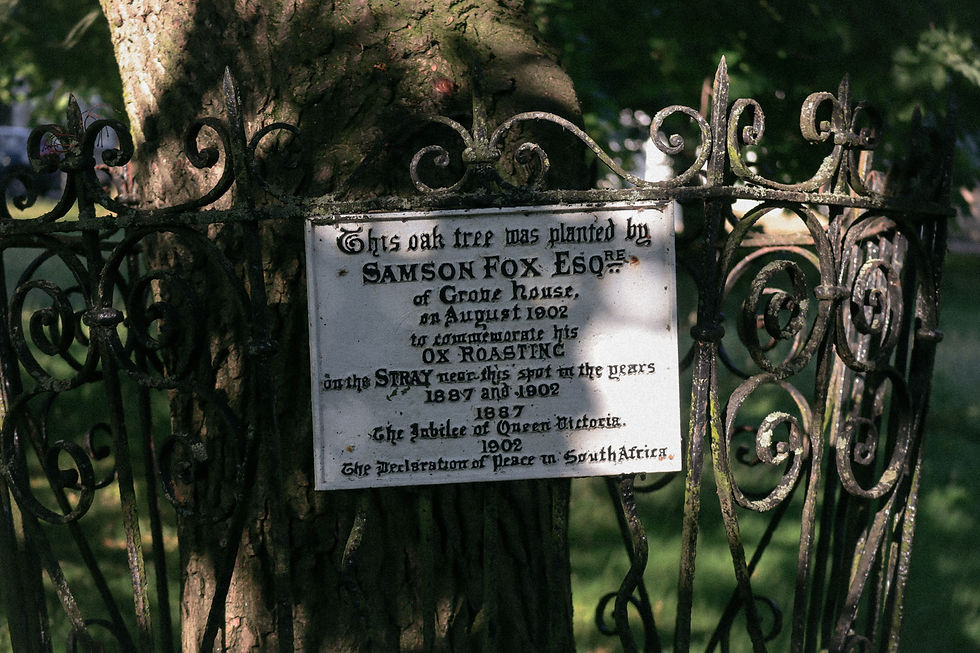
Samson's Oak
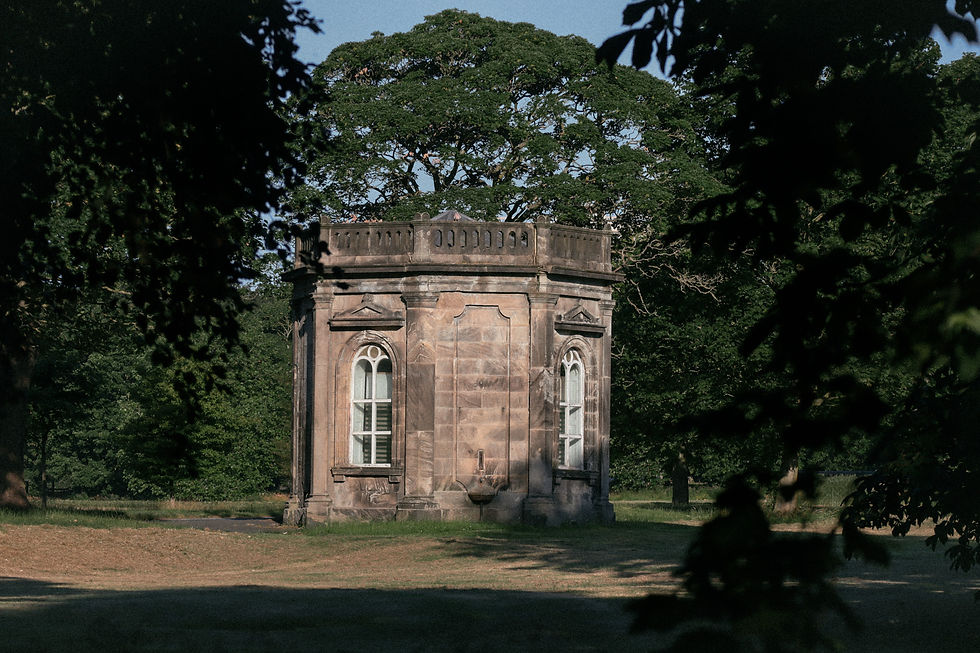
St John's Well

Tewit Well
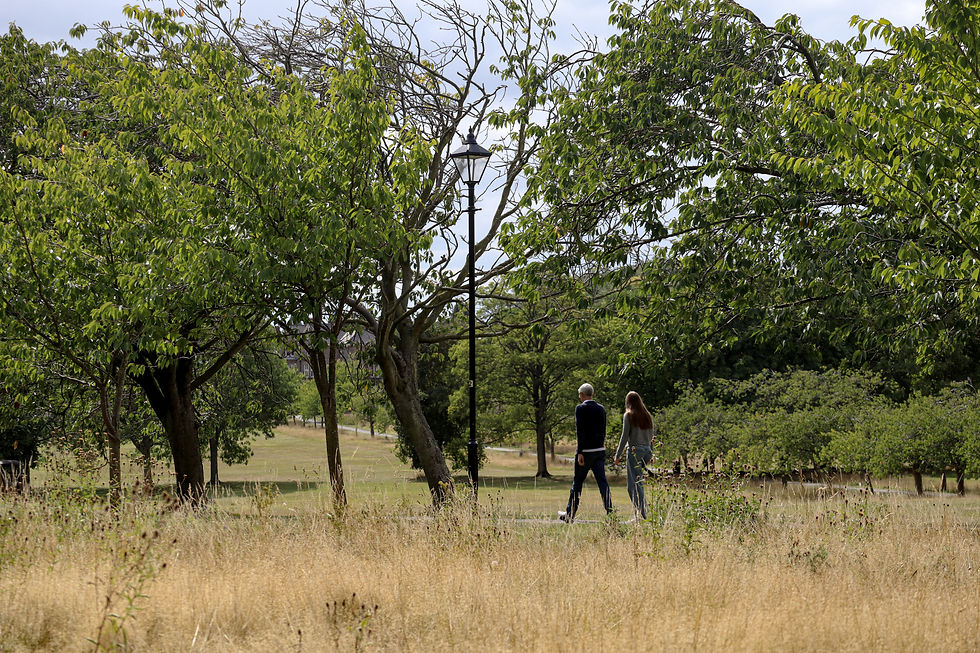
The Stray is Harrogate’s great open common: 200 acres of grassland, paths and trees wrapped around the town. It gives Harrogate one of its defining experiences, a spa town with open landscape held close to its centre.
It is used every day: for walking, running, dog walking, games, events, picnics, parkrun and quiet crossings between neighbourhoods. The Stray is not hidden away as a park at the edge of town. It sits in the life of Harrogate, visible from streets, hotels, houses and shops.
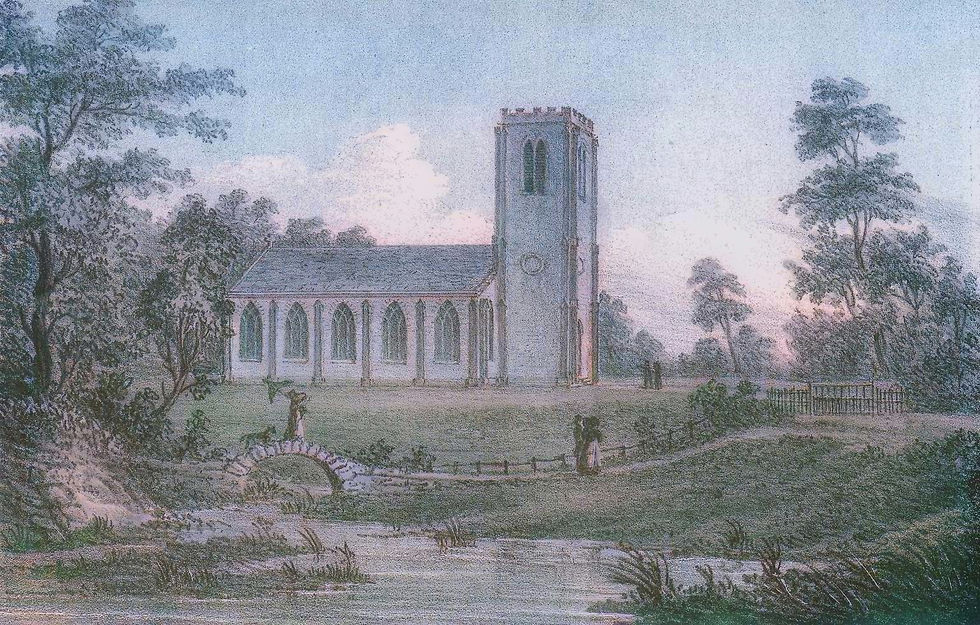
Its history is older and stranger than its neat lawns suggest. The Stray began as common land within the Royal Forest of Knaresborough, protected around the mineral springs that made Harrogate famous. Its story begins with Tewit Well, a lapwing, and the discovery that turned two small settlements into a spa town.
Tewit Well and the lapwing spring
Harrogate’s spa story is usually traced to Tewit Well. In 1571, William Slingsby discovered the chalybeate spring here and recognised its similarity to the iron-rich waters of Spa in Belgium, already famous across Europe for its healing springs.
The name Tewit comes from a local word for the lapwing, or peewit, a bird once common on the open, wet ground around the spring. Before Harrogate became a town of pump rooms and hotels, this was rough common land: water, birds, pasture and mineral-rich ground.
The small domed structure now marking Tewit Well adds another layer to the story. Built in 1807–8 to designs by Thomas Chippindale, it originally stood over the Old Sulphur Well in Low Harrogate before being moved to Tewit Well in 1842. One modest building therefore links Harrogate’s first recognised spring with its later sulphur-water fame.
Pioneering protected landscape
The Stray was created during the enclosure of the Royal Forest of Knaresborough. In the 1770s, under George III and the Duchy of Lancaster, the old forest lands were being divided, claimed and formalised. Across England, enclosure was changing the shape of common land forever.
At Harrogate, something exceptional happened. The Great Award of 1778 set aside 200 acres around High and Low Harrogate to remain open and unenclosed, protecting access to the mineral springs and the right to take the waters. It was a pioneering act of landscape protection at a time when many shared landscapes were being lost.
That decision shaped the town’s future. Harrogate did not grow over its spring landscape. It grew around it. The Stray became the open ground between the two old settlements, holding the wells, paths, grazing rights and public access that gave the spa town its remarkable form.
Moor, Bog and Common
The Stray people walk across today is the result of centuries of change. Its older form was rougher, wetter and more varied: shallow streams, boggy hollows, mineral springs, heath, rough pasture and open moorland edge.
After the Great Award, the land was managed as stinted pasture, with grazing rights controlled across the common. Over time, there was pressure to improve the ground: to drain wet places, level uneven areas, increase grazing value and make the landscape cleaner and easier to cross.
Sanitation and fashion changed it too. As Harrogate expanded, open streams and wet ground were culverted, drained or smoothed away, while the spa town favoured a more orderly, lawn-like landscape. Yet older clues remain in the land: faint undulations, damp lines, hidden watercourses, fungi and fragments of the rougher, wetter common beneath the grass.